

This free Bible study will help you explore Scripture on your own or with a small group. It’s written to help you go deeper into God’s word, drawing from the story of Hagar in the book of Genesis.
Hagar, a lesser-known but deeply significant figure in the Bible, was an Egyptian slave of Sarah, the wife of Abraham. Her story, found in Genesis 16 and Genesis 21, is one of suffering, divine intervention, and God’s unwavering care. Despite being marginalised, Hagar’s encounters with God remind us of His compassion for all people, regardless of social status.
Free Bible Study: The Story of Hagar in the Bible
A Detailed Study with Reflective Questions (NIV)
Genesis 16:1–4 (NIV)
"Now Sarai, Abram’s wife, had borne him no children. But she had an Egyptian slave named Hagar; so she said to Abram, ‘The Lord has kept me from having children. Go, sleep with my slave; perhaps I can build a family through her.’ Abram agreed to what Sarai said. So after Abram had been living in Canaan ten years, Sarai his wife took her Egyptian slave Hagar and gave her to her husband to be his wife. He slept with Hagar, and she conceived." — Genesis 16:1–4
Genesis 16:7–13 (NIV)
"The angel of the Lord found Hagar near a spring in the desert; it was the spring that is beside the road to Shur. And he said, ‘Hagar, slave of Sarai, where have you come from, and where are you going?’ ‘I’m running away from my mistress Sarai,’ she answered. Then the angel of the Lord told her, ‘Go back to your mistress and submit to her.’ The angel added, ‘I will increase your descendants so much that they will be too numerous to count.’ She gave this name to the Lord who spoke to her: ‘You are the God who sees me,’ for she said, ‘I have now seen the One who sees me.’" — Genesis 16:7–13
Overview of Hagar’s Story
- Hagar and Sarah’s Conflict Hagar’s story begins with Sarah (then Sarai), Abraham’s wife, unable to conceive. In an attempt to fulfil God’s promise of descendants, Sarah gives Hagar to Abraham to bear a child. Hagar becomes pregnant, but tension develops as she despises Sarah, and Sarah responds with harsh treatment. This drives Hagar into the wilderness.
- Hagar’s Encounter with God In her desperation, God appears to Hagar through an angel. He comforts her, promises that her son Ishmael will father a great nation, and sends her back to Abraham’s household. Hagar is the first person in the Bible to name God, calling Him "El Roi," which means "the God who sees me." This encounter highlights God’s intimate care and attention to those in distress.
- The Second Time Hagar Is Sent Away In Genesis 21:8–21, after Isaac (Sarah’s son) is born, Sarah demands that Hagar and Ishmael be sent away. Once again, Hagar finds herself in the wilderness, but God hears the cries of her son and provides water. He reaffirms His promise to Hagar, assuring her that Ishmael will become a great nation.
Key Themes from Hagar’s Story
-
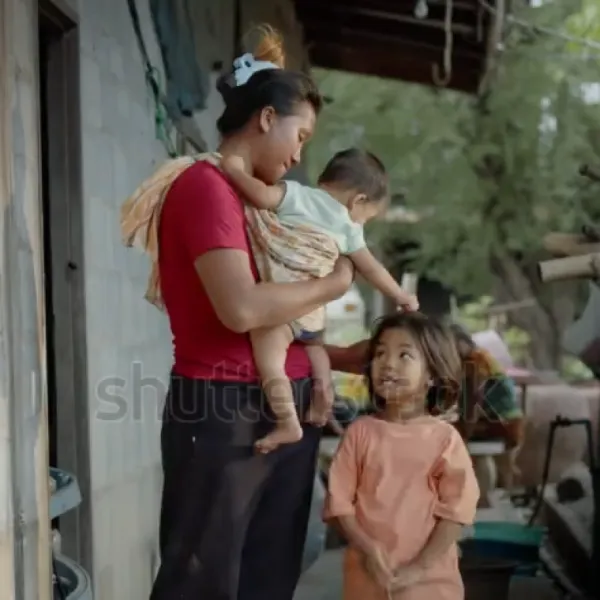
God’s Care for the Marginalised
Hagar’s declaration, "You are the God who sees me," captures a profound truth about God’s nature. He is not distant or detached; He is intimately aware of our struggles, pains, and challenges. In a world where people can feel unseen or forgotten, Hagar’s story reassures us that God sees and understands.
-
God’s Promises and Faithfulness
Even though Hagar and Ishmael were not part of the original covenant with Abraham, God made promises to them. This reflects God’s inclusivity and faithfulness. Even in complex, messy situations, God’s promises hold true.
-
Human Impatience vs. God’s Timing
Sarah’s decision to involve Hagar shows the consequences of taking matters into our own hands when we grow impatient with God’s timing. The resulting conflict highlights the importance of trusting God’s plan, even when it seems delayed.
Want to Keep This Study — and Go Further?
Get a printable copy of this study plus a short companion devotional, What the Bible Teaches Us About Justice for the Oppressed, showing how Hagar’s story connects to survivors today.
Reflection Questions for Bible Study
- How does the story of Hagar challenge our understanding of God’s care for those who are marginalised or overlooked? Are there people in your life or community who are marginalised? How can you reflect God’s care to them?
- Hagar names God "El Roi," meaning "the God who sees me." Can you recall a time when you felt seen by God? How did that experience impact your faith?
- What lessons can we learn from Sarah’s impatience in waiting for God’s promise? How can you apply this to areas in your life where you might be struggling with patience?
- In Genesis 21, God provides for Hagar and Ishmael when they are cast out into the wilderness. How does this demonstrate God’s provision in desperate times? Where have you seen God provide for you, especially in moments of uncertainty?
- Hagar’s story is one of suffering, but also of divine intervention. How does this story shape your understanding of how God works through difficult situations?
- God promised Hagar that Ishmael would become a great nation, even though she was not part of the original covenant with Abraham. What does this teach us about God’s grace and His plans for all people?
- In what ways can Hagar’s story inspire you to trust in God’s timing and provision, especially when circumstances seem bleak or unfair?
Hagar’s Story and Our Lives Today
The story of Hagar reminds us that no one is invisible to God. He is El Roi, the God who sees. In moments of despair, rejection, or isolation, we can trust that God is not only aware of our pain but is present, providing for us in ways we might not expect.
Hagar’s story calls us to see others, no matter their position in life, with the same compassion God extends to those on the margins — and invites us to trust in His timing and provision.
Get Your Free Study Guide + Companion Devotional
Download a printable copy of this Bible study, plus What the Bible Teaches Us About Justice for the Oppressed — a short devotional connecting Hagar’s story to the modern-day survivors Hagar serves. Includes Scripture, a survivor story, and simple ways to pray, give, advocate, or volunteer.